

Working with Parque das Tribos, MUSA, and Terra Kuno on bioacoustic monitoring and the app that supports it
Earlier this year, we traveled to Manaus for our first field deployment under the Klarna and Milkywire AI for Climate Resilience Program. Working with Parque das Tribos, we ran a BioBlitz, tested Tainá, and deployed AudioMoths in the forest.
We returned in July and August to build on that work. The AudioMoths stayed in the forest after we left, and our partners have continued collecting recordings and uploading them to GainForest.app, where Soundscapes is now live.
From July 21 to August 10, we worked with Parque das Tribos, MUSA, and Terra Kuno to deploy acoustic recorders, collect biodiversity observations, and improve our Android app. GainForest has visited Manaus several times, including during and after the Rainforest XPRIZE. This trip gave us more time to work through the practical details with the people using the tools.
We’re doubling down on bioacoustics. AudioMoths can record birds, insects, amphibians, rain, and nearby human activity at scheduled times, including when nobody is there to make an observation. There is a lot we can learn from those recordings. There is also quite a bit of work between setting up a device and having audio that a monitoring team can use.
Much of that work involves the Gainforest app.
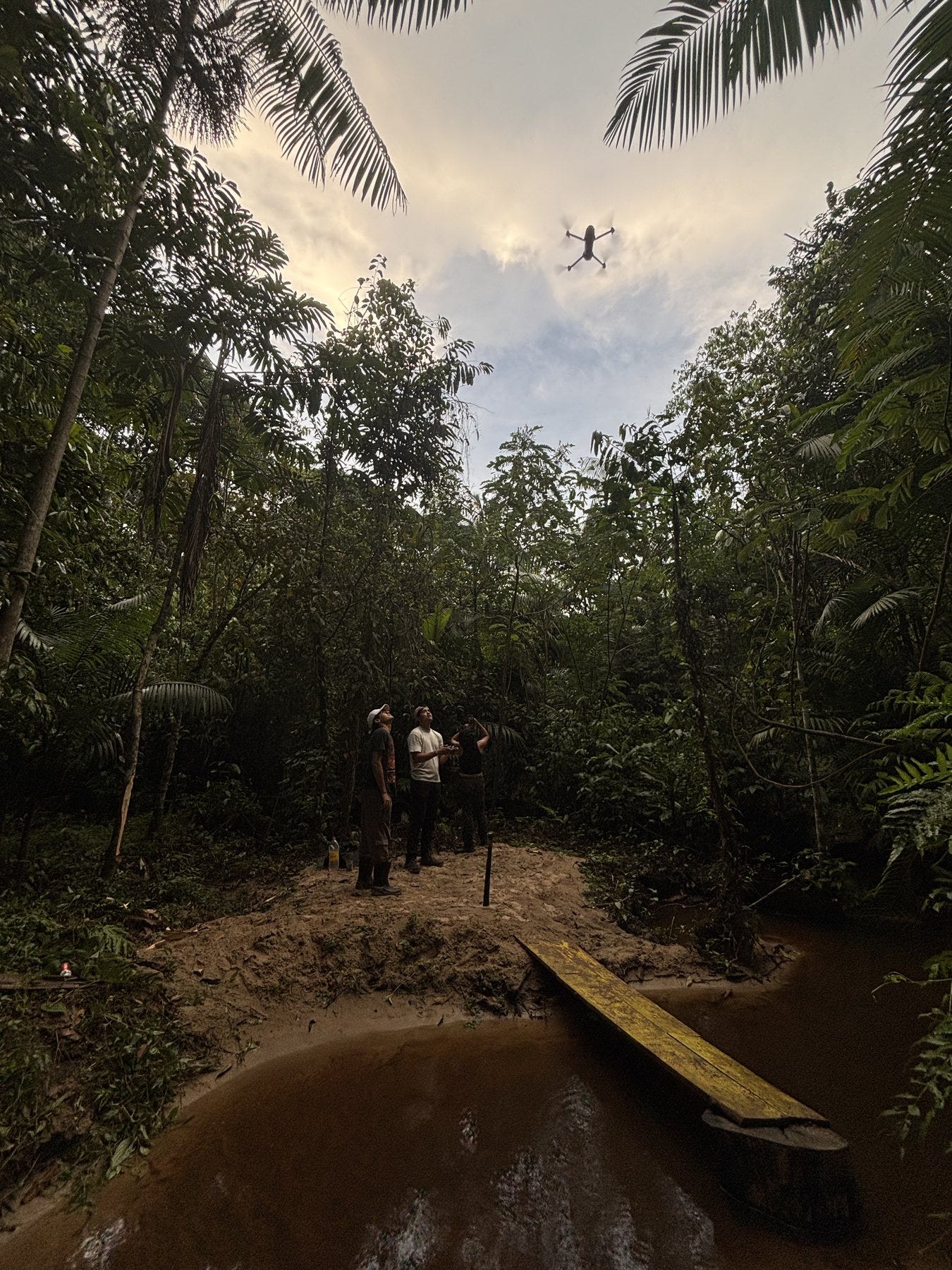
Getting AudioMoths ready
Setup was much easier this trip. Our configuration flow builds on Open Acoustic Devices’ open-source AudioMoth project, and it made configuration far less painful.
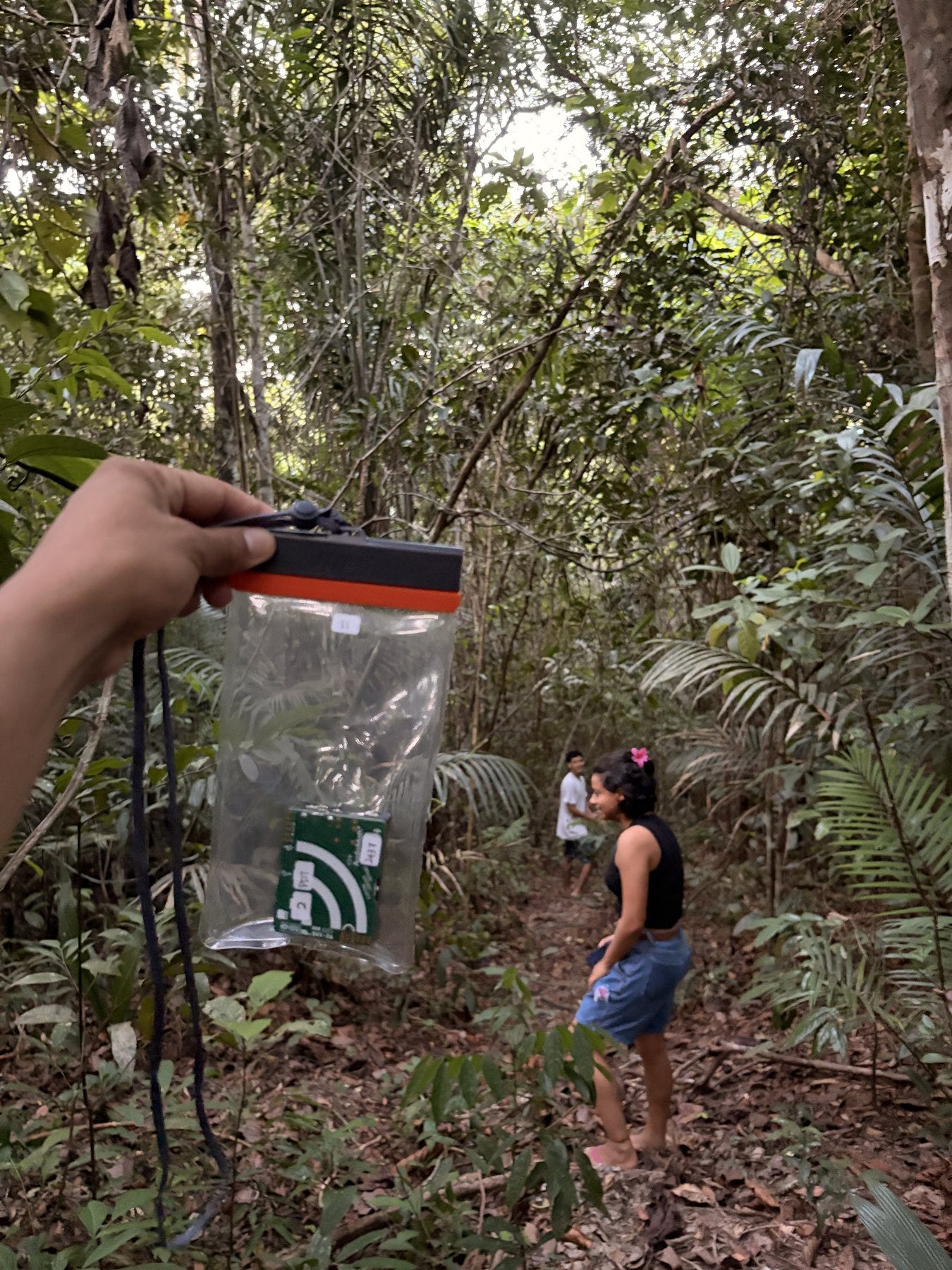
We also improved how the Android app handles deployment records. Teams can search for a deployment, link a recorder to its location, and replay its identification chime offline to match the device in their hand with the right record. That last detail is useful when you’re holding a recorder in the forest without a connection. You still need to know which device it is and where it belongs.
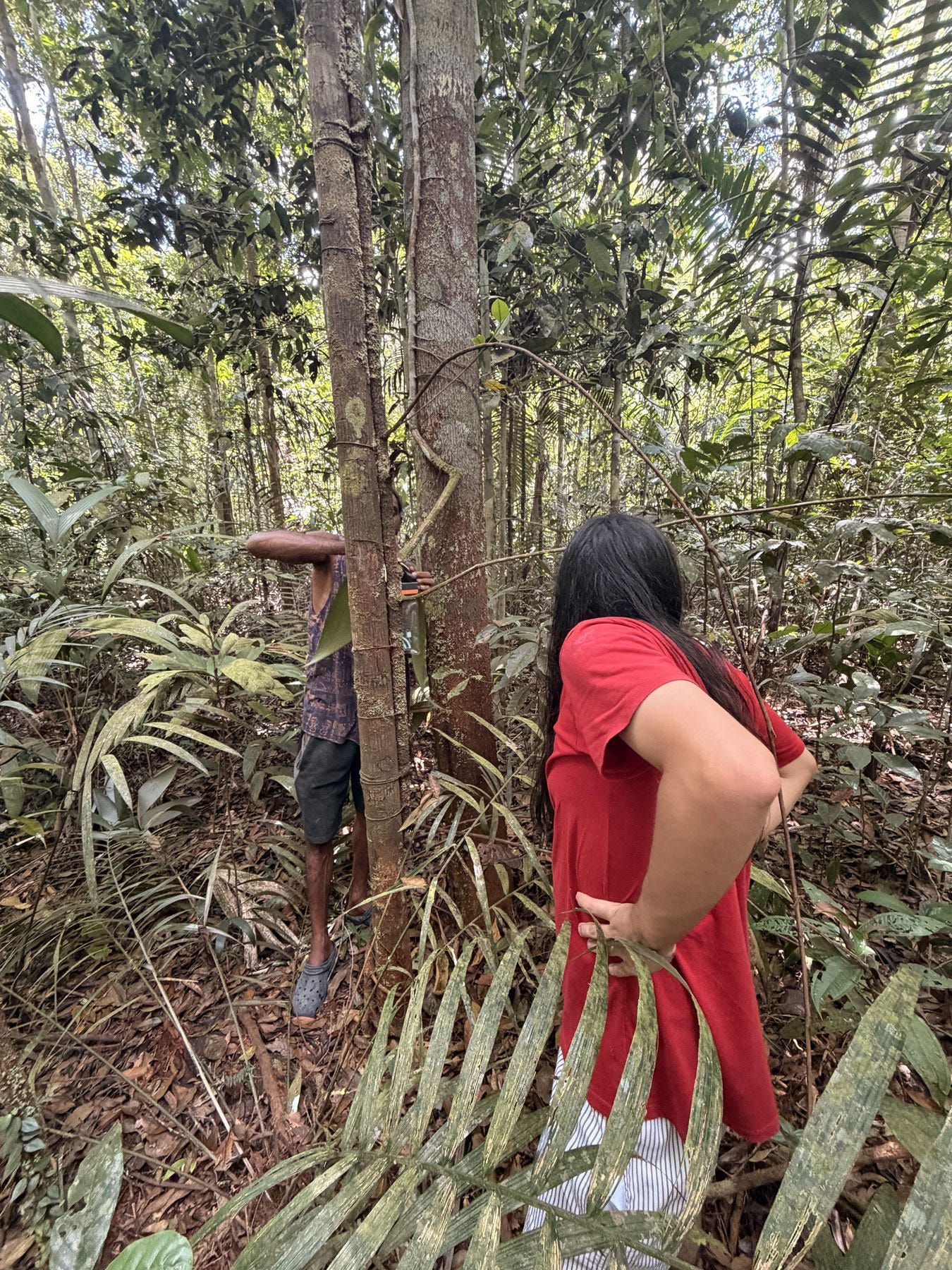
Later, when someone retrieves the audio, those records tell us which device made it, where and when it was recorded, and who deployed it. Keeping that information attached to the recordings saves work when it’s time to organize and review them. Keeping data organized is a big challenge that has to come with ease of use.
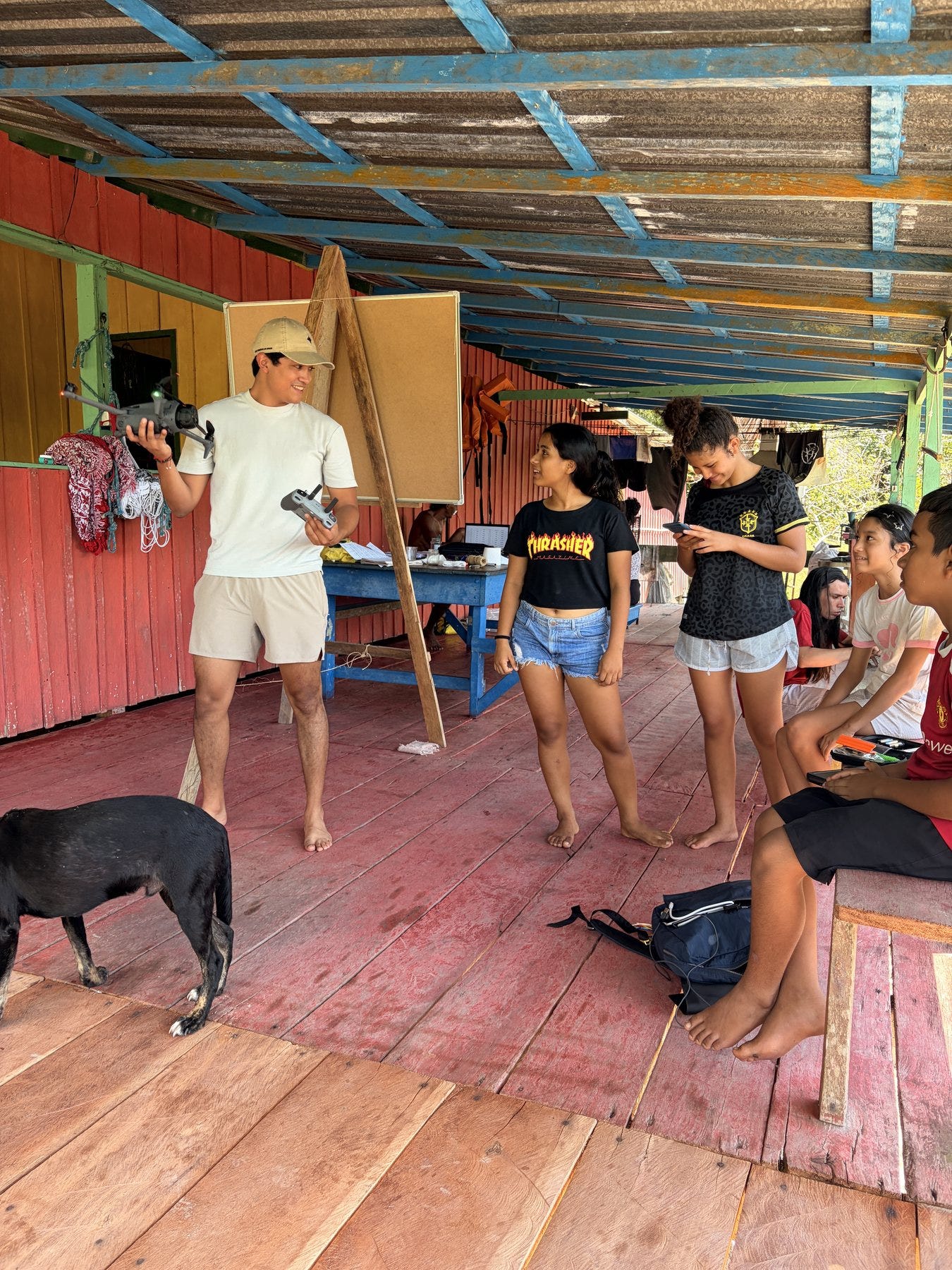
Passing the phone around at Parque das Tribos
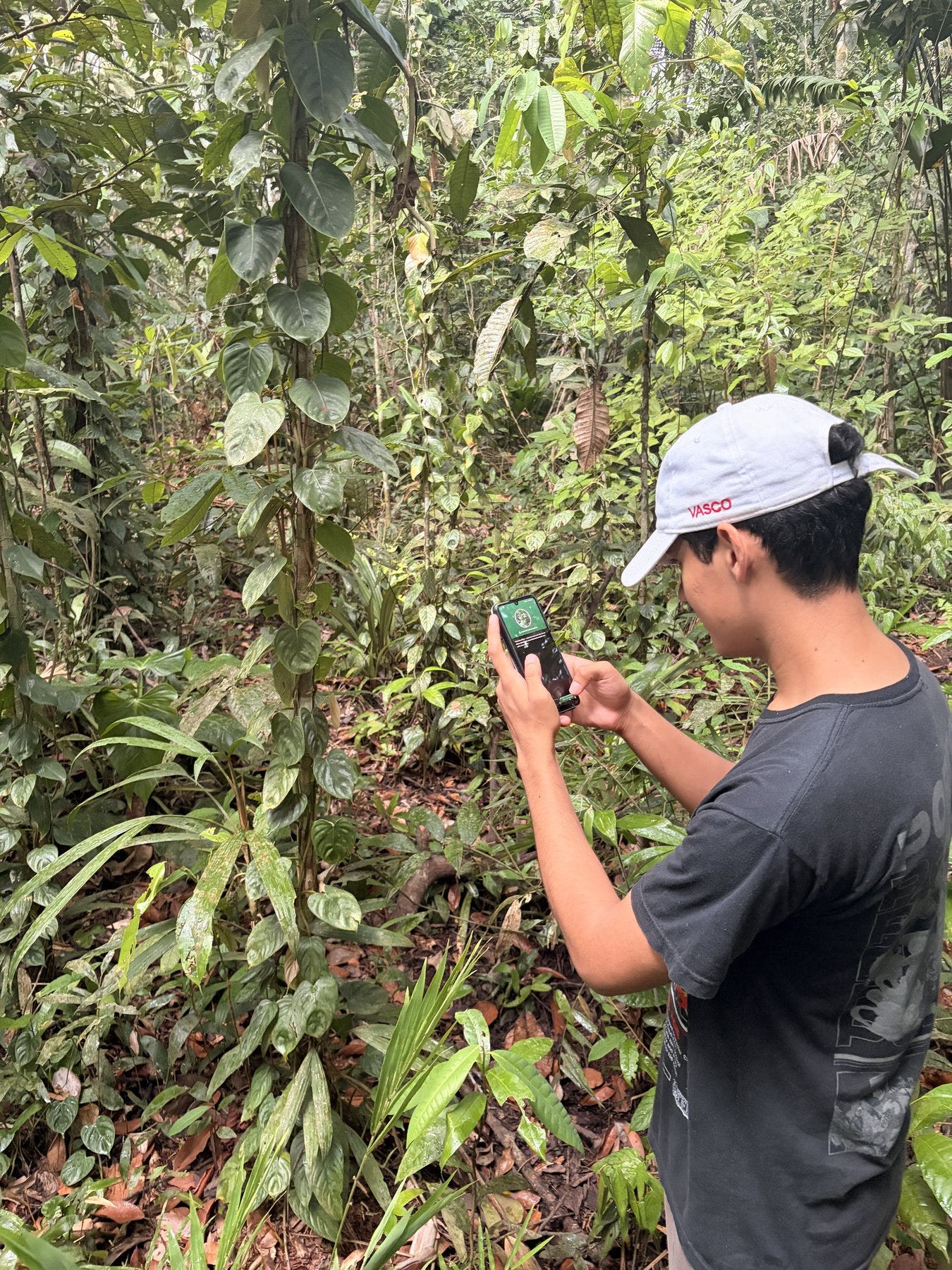
At Parque das Tribos, we met again for hands-on sessions with the app. Phones passed from person to person as people tried the camera and looked through their observations.
Watching someone hesitate over an option tells you something that a list of feature requests often misses. We could see which buttons were hard to find and where people weren’t sure what would happen next. Questions about which organization would publish an observation showed us another part of the app that needed to be clearer.
And then there were the uploads. On a stable connection, saving an observation seemed straightforward. When the signal dropped, people had to keep trying. We were asking them to spend time documenting biodiversity, and the app was making that take longer than it should.
One bug was especially frustrating. When someone chose a photo from their gallery, the app could use the phone’s current location instead of the coordinates saved with the image. A photo taken in the forest and uploaded from home could end up in the wrong place.
We fixed that. The app now preserves the photo’s original geotag when one is available. We also improved location capture through the app, along with camera focus and zoom for close subjects such as insects, fungi, and leaves.
Other changes were less visible but just as necessary. We improved offline drafts and recovery after an upload lost its connection or the app closed. We worked on preventing duplicates and reducing memory use when handling images. We also simplified navigation, made drafts easier to distinguish from published observations, and clarified how to publish under the correct organization.
These changes became version 1.4.0 of the Android app by the end of the trip.
Thank you to Sammy, Eduardo, Jhemily, and everyone at Parque das Tribos who spent time testing with us. Their questions and repeated attempts helped us find what needed fixing.
Partners are already uploading
Soundscapes is ready in GainForest.app, and partners are already collecting and uploading recordings.
The section brings audio together with its deployment details so teams can find and review it. This gives us something concrete to work with at our next session in Brazil. We will listen to the recordings and review the biodiversity observations together, then decide what to change based on that experience.
We’re also quietly working on a new version of the physical AudioMoth. There are no specifications to share yet, but hardware is part of our plans alongside the app and Soundscapes.
Making the work easier to sustain
The BioBlitzes on GainForest.app have gone well, especially with teenagers. We’ve worked on making the contest rules clearer and building them into how the app works. We want to make nature conservation tech easy to use and be clear about what people can expect.
Our partners are already collecting and uploading. Most have been doing this without pay, because they’re interested in the work. But setting up recorders, going back to collect them, and uploading files takes time.
We still need a way to build incentives for that work beyond the grant period. People want to keep going; we shouldn’t expect them to volunteer indefinitely.