
What we learned by listening: deploying conservation AI in the Amazon
By Nurfatin Hamzah, Diego Rivera, David Dao, Samuel Munduruku and Eduardo Santos Silva

During the ice breaker on our first morning at Parque das Tribos, we asked everyone to share their name, their community/ tribe, one word connected to the forest, and the story behind it. A young lady from the Ticuna community chose the word “fish.” She explained that in Ticuna culture, fish are not just part of the river or part of their diet. They live inside tribal songs, carried through music across generations. It is a relationship with nature that no biodiversity database in the world currently holds.
We had come to Manaus to pilot technology. We left with a much deeper appreciation for the knowledge that was already in the room.
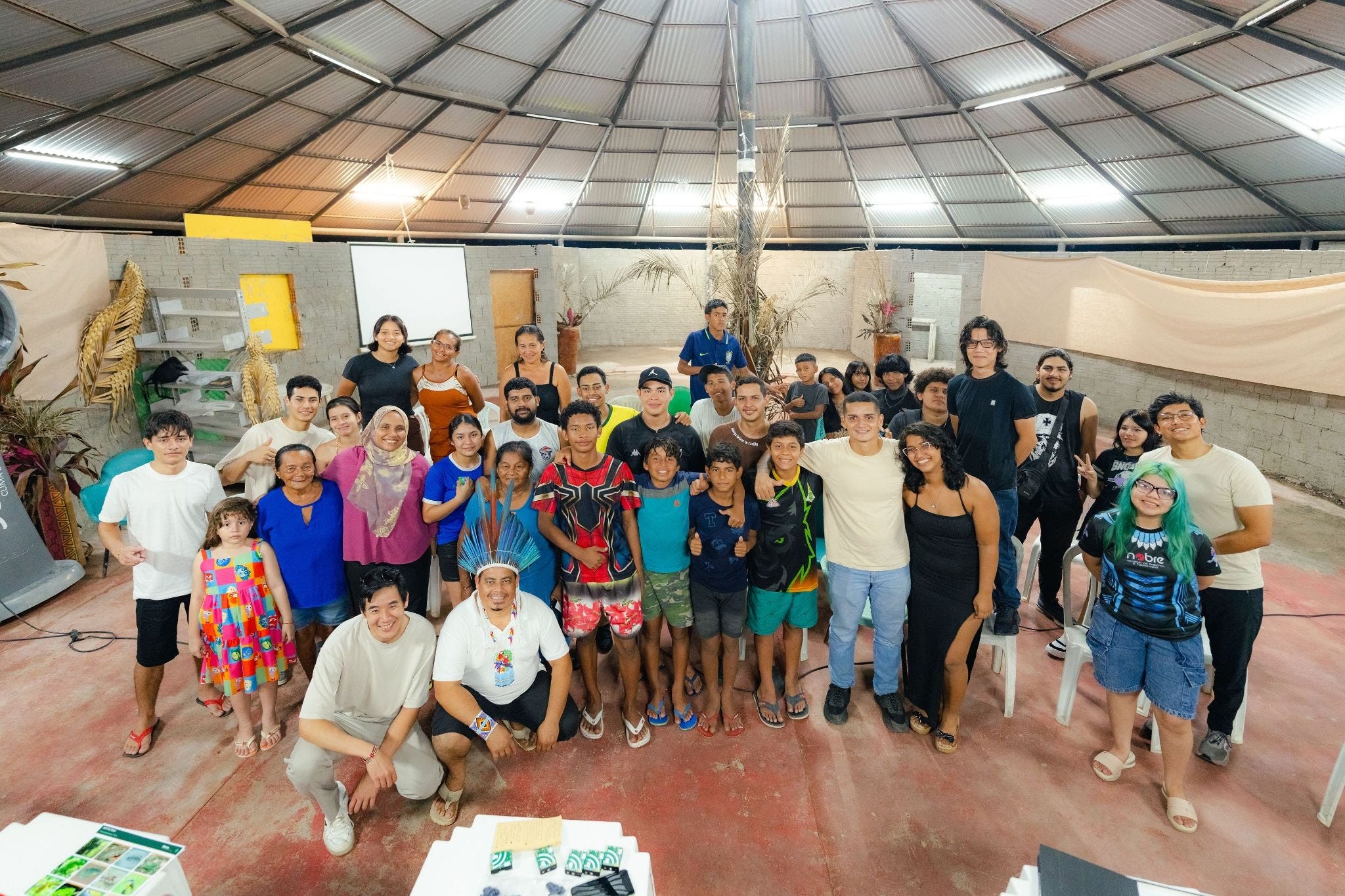
Five days at Parque das Tribos
The trip was five days total: a two-day workshop and a three-day BioBlitz (a rapid, community-driven biodiversity documentation sprint) at Parque das Tribos, an urban indigenous neighbourhood in Manaus that is home to families from multiple indigenous nations living together in one community. Around 30 participants joined us, from Sateré-Mawé, Ticuna, Baré, and non-indigenous backgrounds, mostly young people. The programme was supported by Klarna and executed by Milkywire through their AI for Climate Resilience initiative, and the main goal was to pilot the second version of Tainá, GainForest’s AI assistant for nature stewards.
Tainá started two years ago alongside the ETH BiodivX team for the XPRIZE Rainforest challenge, built with communities from the beginning. Since then, our team has continued to co-develop it with communities, adding new features and deeper functionality. Each community now hosts their own instance on a Raspberry Pi connected via Starlink. A local champion manages access. A data council governs what is shared and what stays private. The data lives on that device, not on our servers.
Before the workshop started, we spent the morning getting the infrastructure in place: Starlink, cables, Raspberry Pi. Samuel and Eduardo, our local champions at Parque das Tribos, were right there with us setting it all up. When we walked participants through the setup, the main thing we wanted them to understand was that everything on this device belongs to the community.
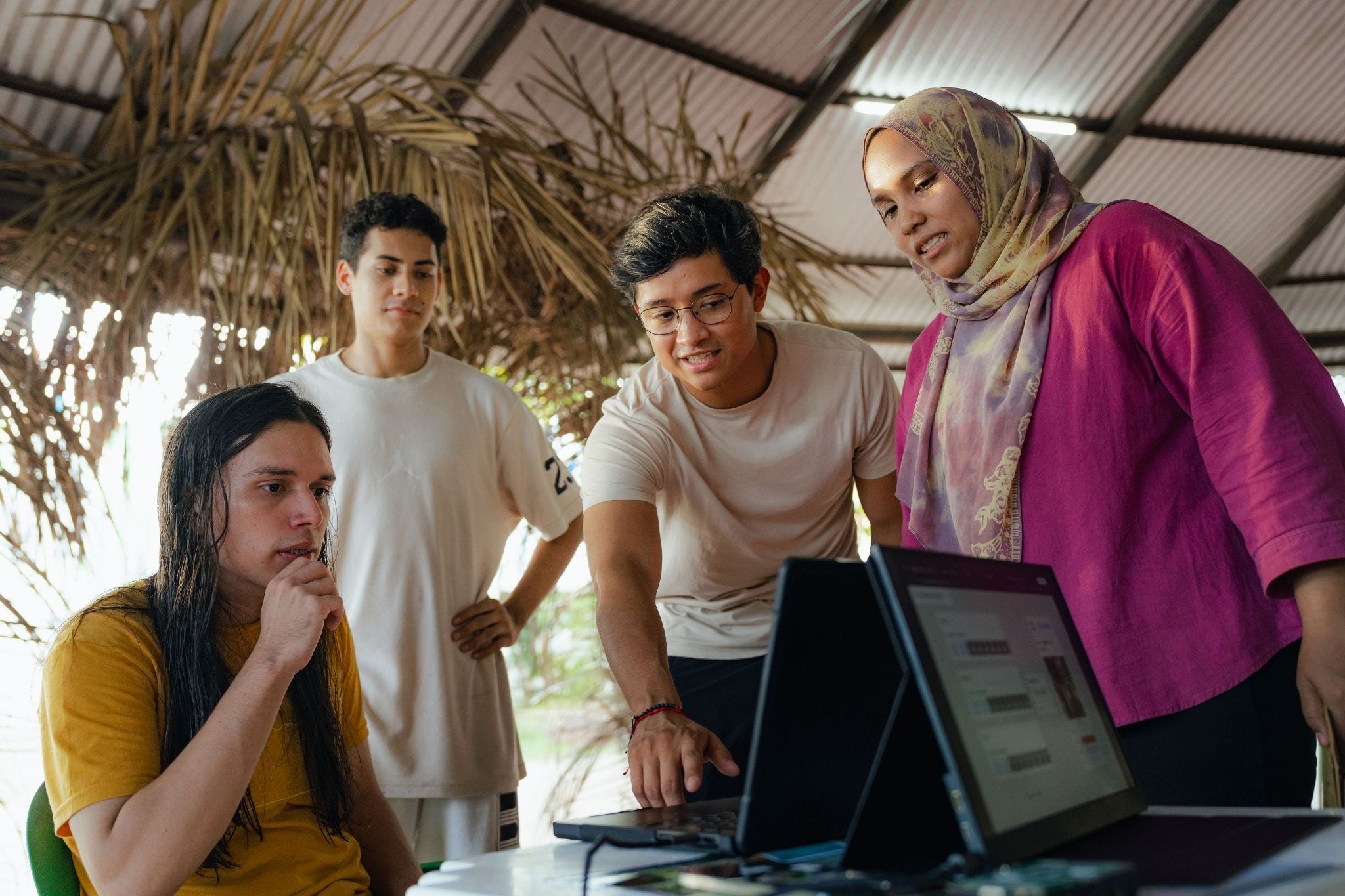
Demystifying AI together
Many of the participants already use AI tools for school and personal projects, so we skipped the “AI is coming” pitch and went straight to how it actually works. We used Teachable Machine and had everyone train a simple classifier on their own selfies. People got it quickly: the model finds patterns in the examples you feed it. That is all it is.
From there we talked about what happens when those examples are skewed. Biodiversity data from the Amazon is massively underrepresented in global datasets compared to the Global North. That gap shapes what AI gets right and what it gets wrong. In GBIF alone, the largest open biodiversity database in the world, observations from Brazil make up just 1.12% of all records. Tainá is one way for communities to contribute their own observations to those datasets, on their own terms, while keeping control over the data.
First encounter with Tainá
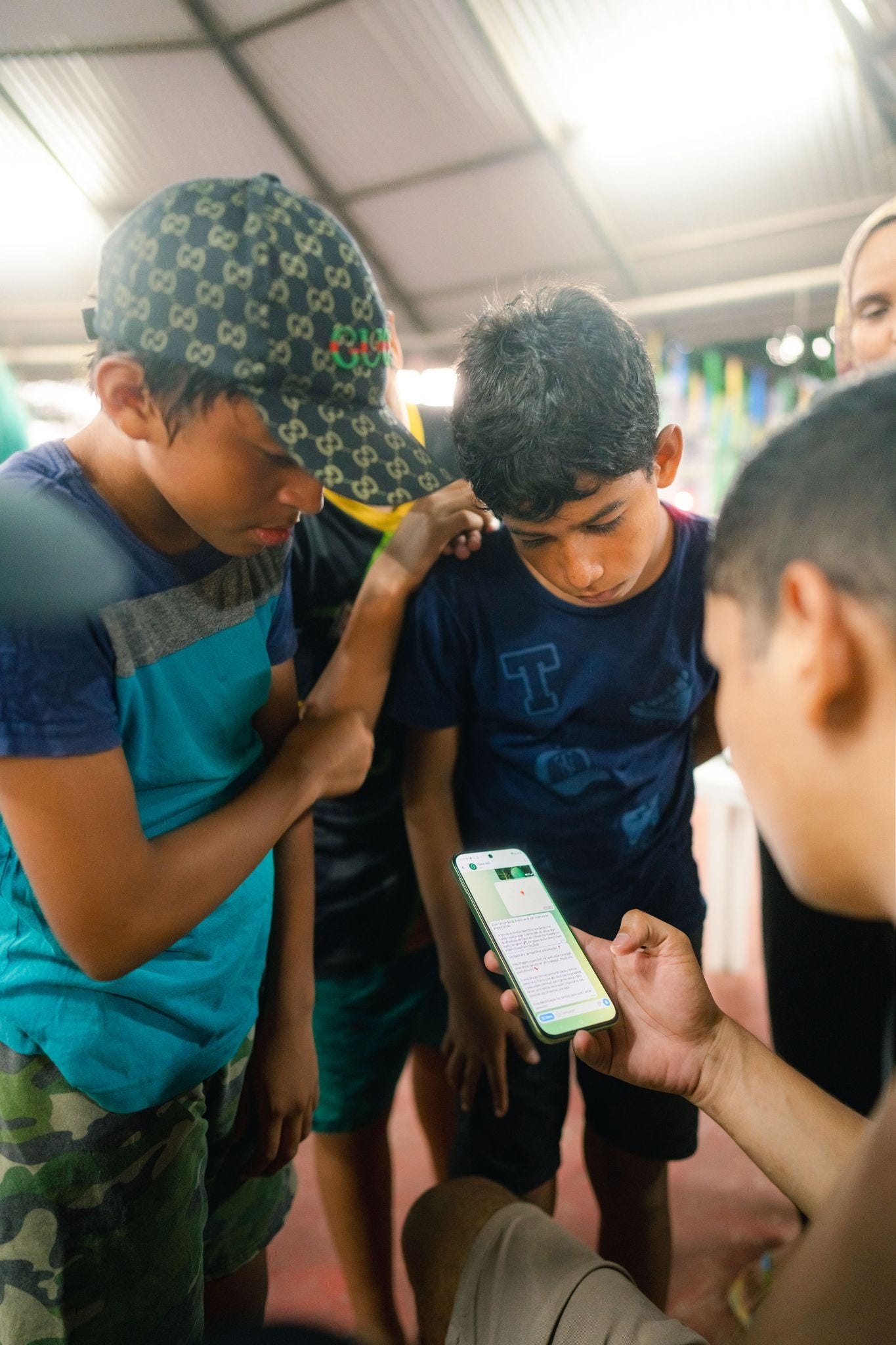
Tainá is a Telegram bot. You send it a photo, text, or audio and it helps you identify species and log biodiversity records. We handed it to the group and people started exploring.
Participants picked it up fast. They were sending photos and testing it. Some were comparing results with each other. There is often a gap between young people’s comfort with technology and their connection to the environment around them. Tainá sits right in that gap.
We did run into some barriers. In Brazil, new Telegram accounts currently require a R$7 payment for SMS verification. Not a large amount, but enough that some participants who were new to the platform hesitated or couldn’t get in. We had phones with Telegram pre-installed to work around it, and that helped. But the inequality was visible. Building something free does not mean access is free. Tainá also struggles with audio messages in local dialects. Participants naturally wanted to speak to it the way they speak to each other, but the underlying AI models just aren’t there yet for many indigenous and regional languages. This is not a Tainá-specific bug. It is a limitation of where AI speech recognition is right now, and it shows exactly who current AI systems were and weren’t built for.
In the forest
Day two we went out to a nearby forest patch and this was honestly the highlight of the whole trip.
People spread out with their phones running Tainá, photographing and identifying what they found. We deployed AudioMoth sensors in the trees. And what struck us was not how people used the tool but how they moved in that space. One participant crouched near a fallen log and held completely still, waiting maybe a full minute for an insect to settle before taking the shot. Someone else spotted a plant and immediately angled the phone underneath it to show the leaf pattern. Nobody instructed them to do any of that.
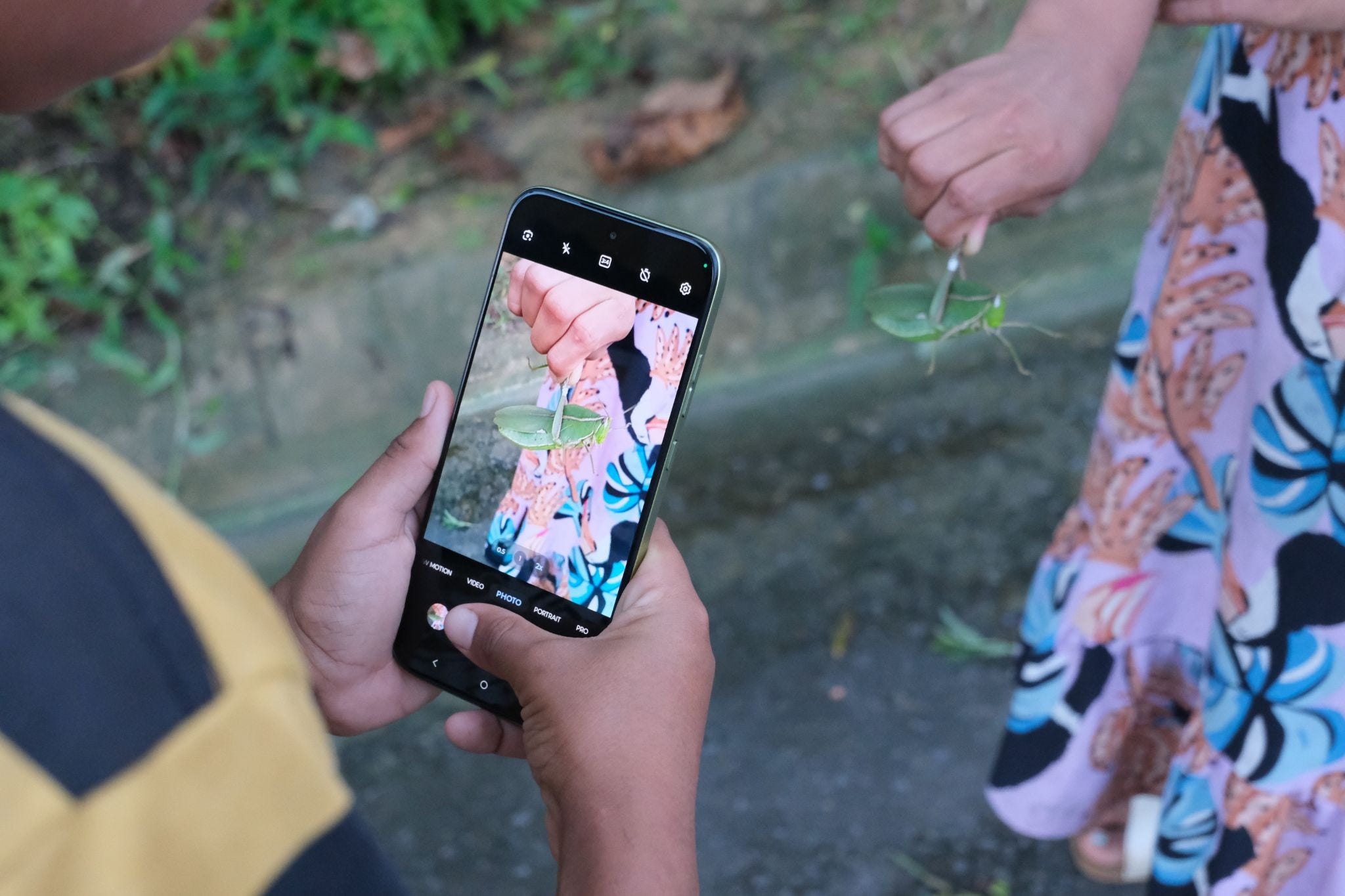
We work in conservation technology, and it is easy to fall into the mindset of building tools that teach people to be better stewards. Being in that forest reminded us that the observation skills, the patience, and the deep familiarity with this environment were all already there. We were not bringing knowledge in. We were learning what knowledge looks like when it is lived every day.
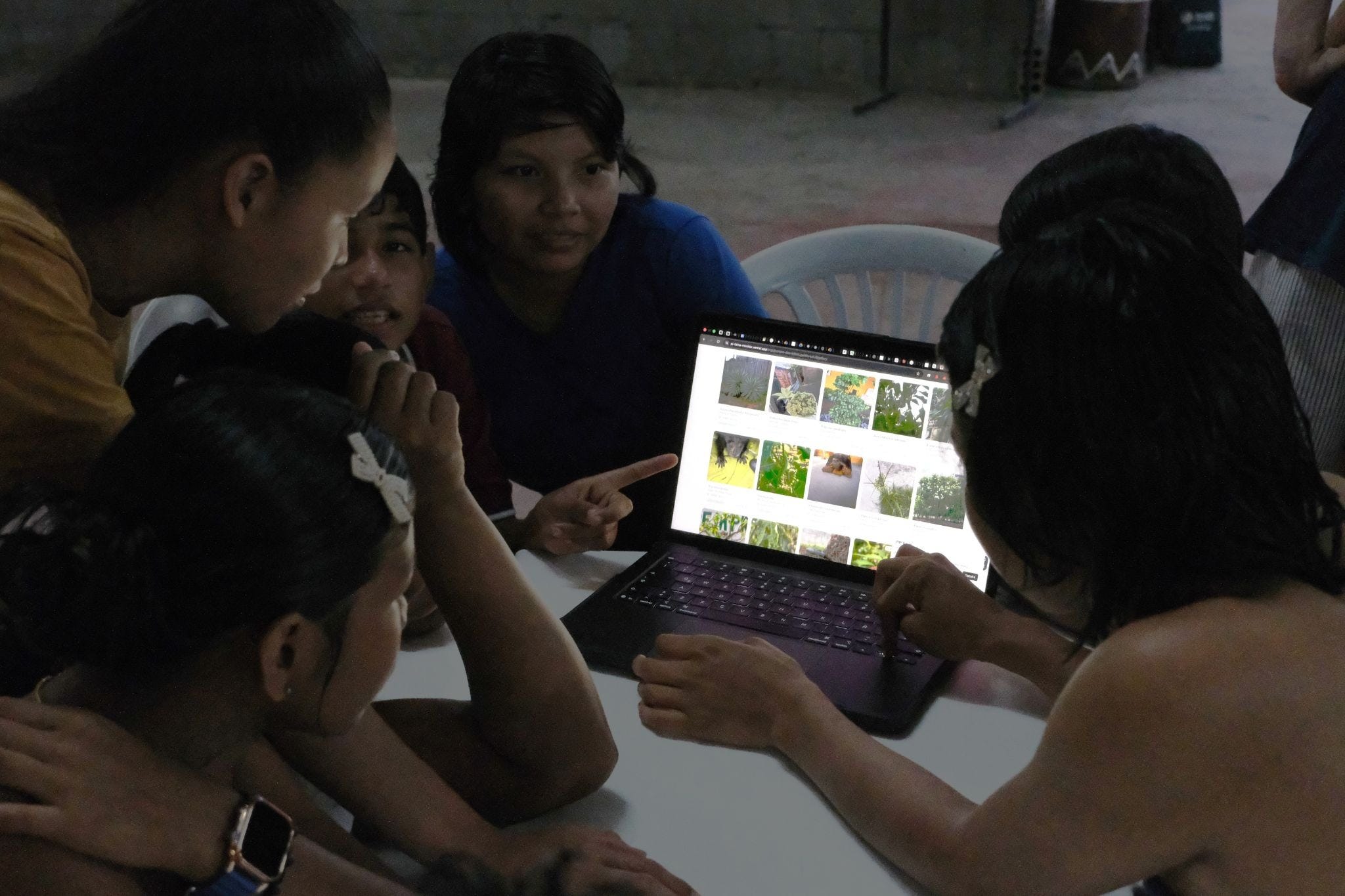
Afterwards we gathered and pulled up a dashboard showing everything the group had collected. People started finding their own entries, pointing them out, showing each other. “That one is mine.” There was genuine pride in the room. These were their observations, attributed to them, visible and organized.
Feedback from the wall
At the end of the workshop, participants wrote their thoughts about Tainá on a large sheet of paper in Portuguese. We translated it directly, no paraphrasing:
What you liked
Helps with identification
Teaches about plants and animals
We want it to keep improving so we understand it better
We can correct it when it’s wrong
What you didn’t like
Doesn’t understand us when we send audio (participants speak Portuguese but with local dialects that Tainá doesn’t yet recognise)
Repeats symbols too often
Doesn’t vary its tone
“We can correct it when it’s wrong” was listed under what they liked. Without anyone prompting them, participants saw themselves not just as users but as people who shape the tool. That dynamic is exactly what co-design is supposed to produce, and they arrived at it on their own.
What stays public, what stays close
We then held a session on data privacy. Not as a policy walkthrough, but as an open question: what do you want the world to see, and what do you want to keep with your community?
The conversation turned into one of the most meaningful parts of the whole week, because it surfaced how deeply intertwined data, culture, and personal experience really are for people who live alongside nature every day.
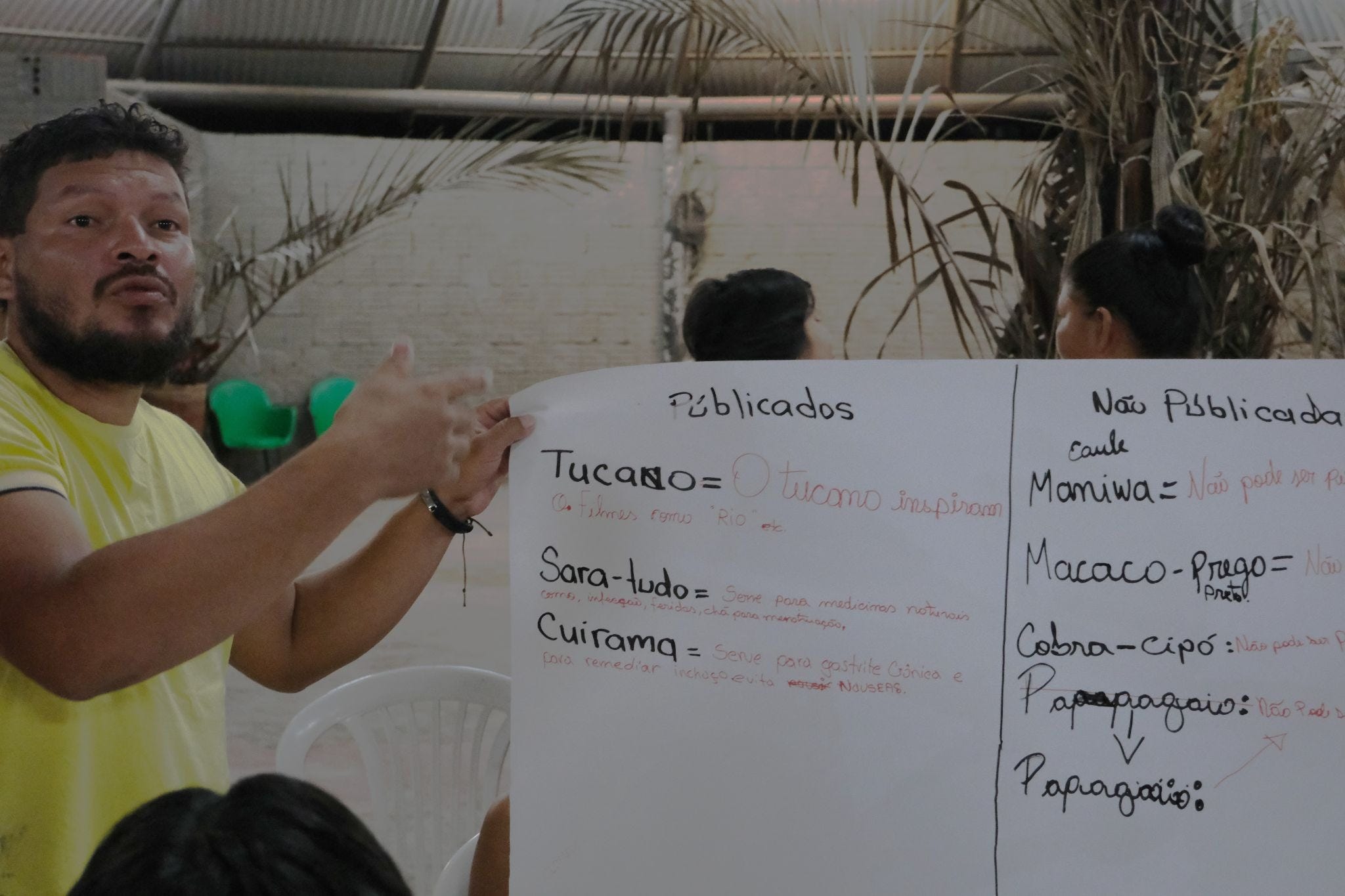
Participants wanted biodiversity observations to be public. Not because anyone asked them to, but because they see their knowledge as something that should inspire others. They want future generations, their own and the wider world, to understand their way of seeing and living with the forest. They want local plant names, medicinal uses, and food traditions shared openly so others can learn from them. There was a generosity to it. A sense that this knowledge becomes more valuable when it travels.
But then the boundaries. Rare species should stay private, because visibility can attract the wrong kind of attention. Culturally significant species, the ones that carry spiritual or historical meaning, should not be exposed to outsiders who might extract or exploit them. These are not abstract data governance concerns. They reflect generations of lived experience with what happens when outside interests gain access to indigenous knowledge without consent.
And then something came up that none of us had anticipated. Some participants do not want to interact with certain species at all. Not because of data policy, but because of personal trauma. Being bitten by a snake. Being poisoned by a plant. For them, the boundary is not about who sees the data. It is about not wanting to engage with something that carries real pain.
This conversation was not about configuring software. It was about a community deciding together how they want to use a tool based on their values, their history, and their lived experience. What came out of it are norms, not settings. Agreements between people about what to share generously, what to protect carefully, and what to leave alone entirely. A species is never just a data point to someone who lives with it. It can be food, medicine, song, danger, or grief. The way a community chooses to use Tainá should reflect all of that.
Making sense of it all
Alongside Tainá for visual observations, we introduced two other monitoring tools during the workshop.
The first was AudioMoth, a small bioacoustic sensor you attach to trees to record forest sounds over time. The community received three of them. We used Teachable Machine to show how sound classification works, training a model live so participants could see how AI learns to distinguish audio. The sound data feeds into the Raspberry Pi alongside everything else, and can be packaged into a Bumicert, an impact certificate built for nature stewards to prove and get recognised for their work.
The second was drone mapping. You take overlapping photos from above and stitch them together into a detailed visual map. Done regularly, this can show regeneration or degradation over time, help mark territory, and produce formal visualisations often needed for official documentation or funding applications. Drone imagery can also be included in a Bumicert.
Together these tools form a monitoring system at different scales. Tainá for what you see on the ground, AudioMoth for what you hear, drone imagery for the bigger picture from above. All of it flows into the same Raspberry Pi and all of it can become evidence of stewardship through Bumicerts. No single tool tells the full story, but together they give a community a real way to document what is happening in their environment over time.
The BioBlitz
After the workshop, the BioBlitz ran for three days, scheduled after school hours so younger participants could join. Groups headed out on their own with Tainá, explored their surroundings, logged what they found, and came back buzzing to compare notes. 160 observations by the end. We wrapped up with food, prizes, and a lot of celebrating.
All of that data lives on the community’s Pi. Over time, these observations can be packaged into what we call Bumicerts, impact certificates built for nature stewards. Most environmental certification systems are expensive and assume a level of resources that many communities don’t have. Bumicerts are our attempt to change that, to let stewards prove the work they are already doing using the data they collect on their own terms, and turn that into visibility and hopefully funding.
Leaving the kit behind
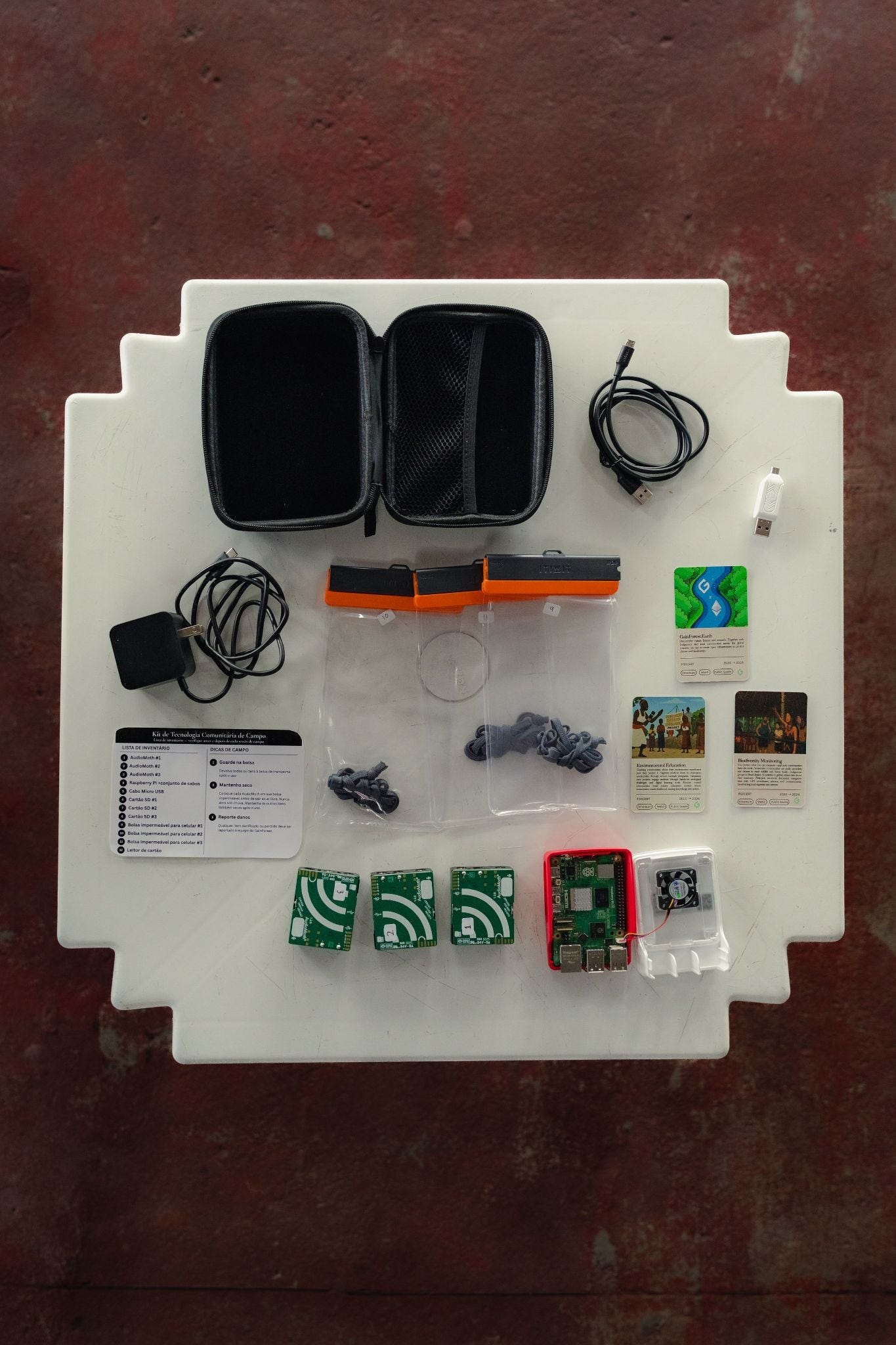
Before we left, we handed over a community tech kit: the Raspberry Pi with Tainá running on it, the Starlink connection, AudioMoth sensors, and the phones. Samuel and Eduardo know the setup inside out and will keep things running from here. The idea was always that this would not end when we flew home. The community keeps using Tainá, keeps deploying sensors, keeps collecting observations on their own time, in their own way. We built it together. Now it continues.
What we are taking back
The community is already moving forward. They are adding more members to the data council and the local champions are planning their own mini expeditions and BioBlitz events, independent of us. That was always the goal.
On our end, we have work to do before the next deployment, like finding a workaround for the Telegram SMS paywall and building in the ability to edit observations after upload. We also want to make sure the tool reflects the community norms that came out of the privacy conversation, so that how Tainá behaves matches how the community has decided to use it.
A few things that will stay with us beyond the task list:
Building something free does not mean access is free. The Telegram R$7 paywall made that visible immediately.
Audio in local dialects is a systemic AI limitation. AI speech recognition still does not serve most indigenous and regional languages well.
How a community uses Tainá should be shaped by the community itself, not by default settings. What to share, what to protect, what to avoid entirely. These are social agreements, and our job is to make sure the tool respects them.
The communities we work with are not beneficiaries of our technology. They are collaborators who hold knowledge that our tools can only begin to represent. A Ticuna song about fish carries ecological understanding that decades of sensor data might never capture. A teenager who holds perfectly still for a minute to photograph an insect has a relationship with the natural world that we can only hope our tools become worthy of. We went to Manaus to share a tool. We came back with a better understanding of what that tool needs to be, and who it really serves.